


4x faster surgical planning
with AI-powered automation


%201.svg)
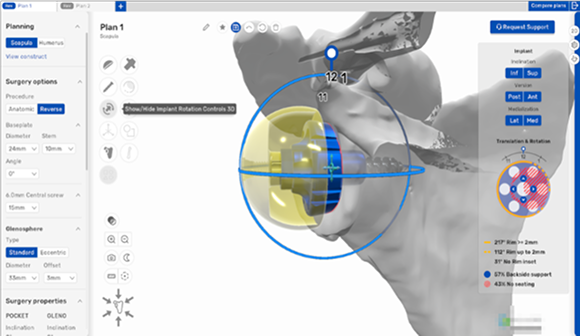
In strategic partnership with Provoyance® powered by intive, the goal was to develop preoperative planning software that would convert CT imaging studies into detailed 3D bone reconstructions, delivering precise anatomical visualization and accurate surgical plans for both anatomic and reverse shoulder arthroplasty cases.
The solution had to be achieved within the strict regulatory framework of the U.S. healthcare market. FDA compliance was a core requirement from day one, requiring adherence to IEC 62304 standards, full process traceability, and clinical validation against real imaging results.
Provoyance® powered by intive developed a comprehensive Software as a Medical Device (SaMD) bridging AI-driven automatic bone detection with immersive 3D visualization for real-world clinical practice.
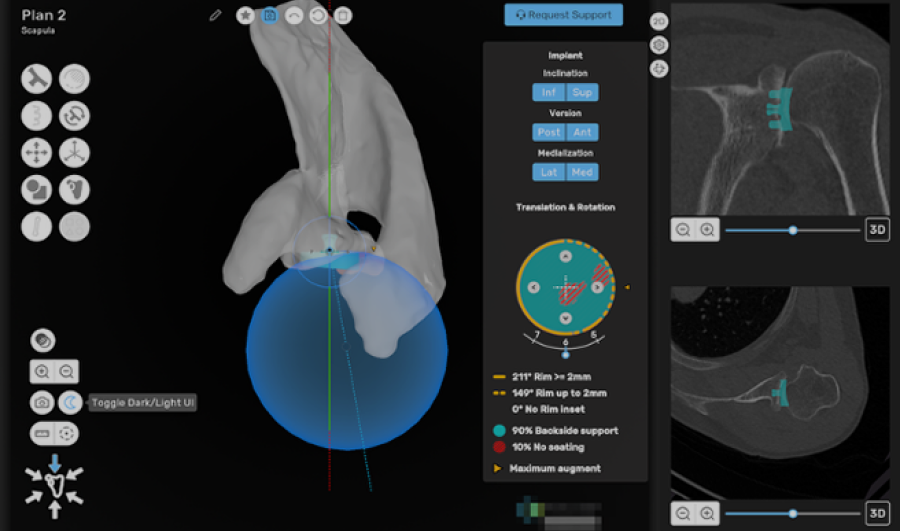
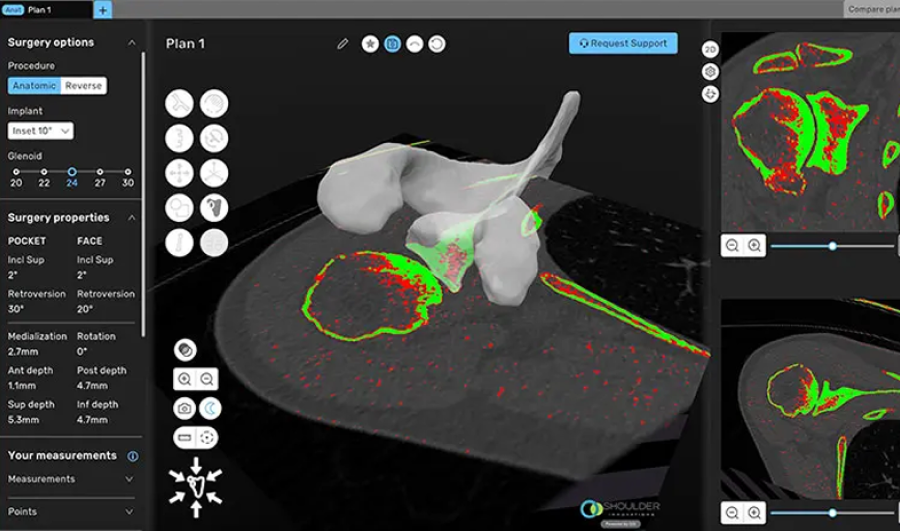
The platform leverages a scalable machine learning model with custom algorithms for automatically identifying and segmenting bone structures from CT scans. Advanced computer vision techniques enhance segmentation accuracy, enabling surgeons to select images of interest and receive interactive 3D anatomical models. These models allow evaluation of implant options, precise positioning planning alongside 2D views, and generation of comprehensive surgical reports for OR reference.
To achieve optimal 3D rendering, the team employed Unity – a 3D graphics engine typically used in video games. This unconventional choice delivered a visually stunning interface with real-time rendering capabilities for complex anatomical structures, transforming how surgeons interact with patient anatomy.
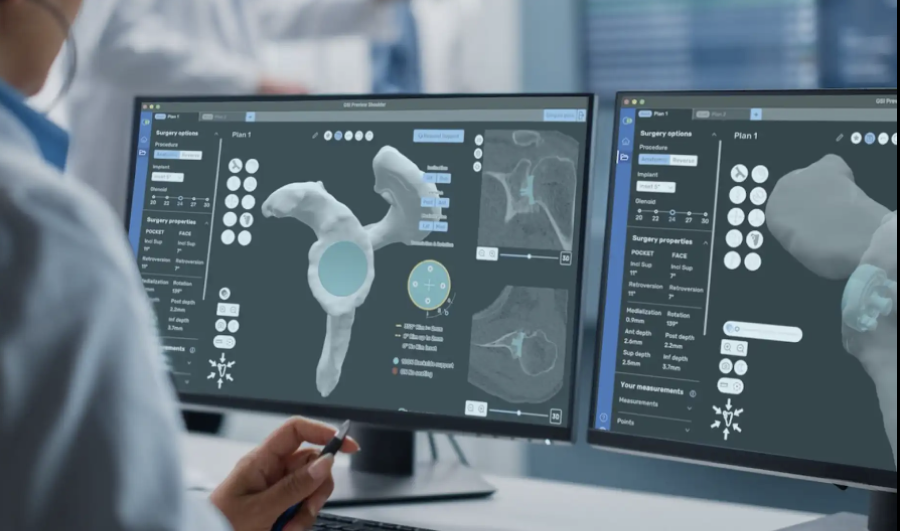
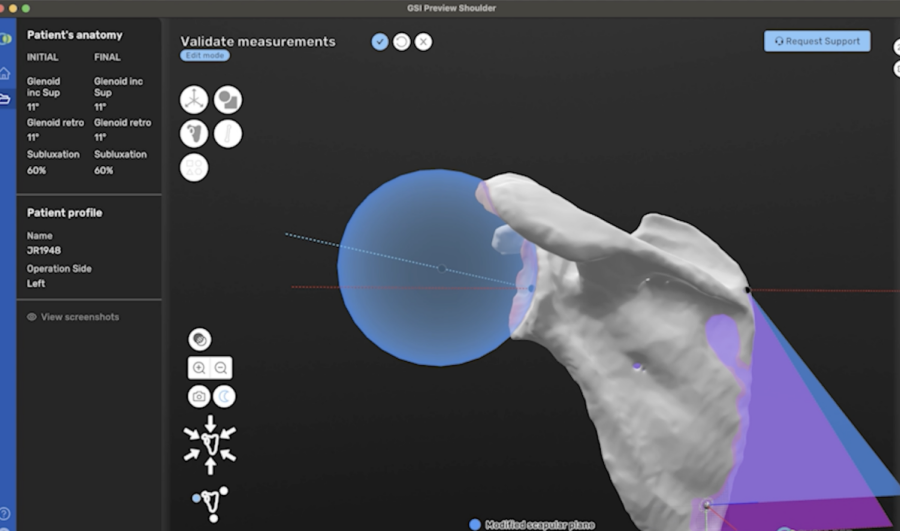
The architecture was designed for real-world clinical environments: cloud-based infrastructure for scalability, cross-platform compatibility, and integration capabilities with hospital systems. Development followed an iterative Scrum framework tailored for healthcare software, with specific procedures meeting FDA clearance requirements and IEC 62304 standards for medical software lifecycle.

4x faster surgical planning
with AI-powered automation

90%
reduction
in required support for segmentation

FDA 510(K) Clearance
achieved in April 2021


.png)
.png)
.png)
.png)