



TL;DR: European data sovereignty is no longer a future concern. It is a present operational and legal reality. This article examines the regulatory momentum, the practical challenges organizations face, and how companies can design architectures that combine sovereign control with AI-driven innovation. intive helps organizations make this transition by design, not by default.
Digital sovereignty is becoming a strategic priority as organizations grow dependent on global cloud platforms. Legal frameworks such as the U.S. CLOUD Act highlight risks related to jurisdiction and external access to sensitive data, pushing European companies to rethink control over digital assets. At the same time, Europe is advancing sovereign cloud initiatives, certification standards, and regulations that support secure, interoperable infrastructure.
Businesses now face the challenge of balancing data protection, AI-driven innovation, and ongoing digital transformation. intive helps organizations bridge this gap by designing sovereign-by-design cloud and AI architectures, enabling secure data sharing, regulatory compliance, and scalable innovation that turns data sovereignty into a driver of resilience and growth.
A Changing Legal Reality
The foundation of today’s digital sovereignty debate was laid in 2018, when the U.S. Cloud Act came into force. The legislation allows U.S. authorities to request access to data held by American cloud service providers, even when that data is stored outside the United States.
This concern moved from theory to reality in June 2025, when during a French Senate inquiry on public procurement and digital sovereignty, Anton Carniaux, Microsoft France’s director of public and legal affairs, was asked if French citizen data could be kept from U.S. authorities without French approval. He replied, “No, I cannot guarantee it.”
The episode highlighted a key challenge for European organizations: relying on foreign cloud providers can create unavoidable legal exposure, making true data sovereignty dependent not only on technology, but on jurisdiction, governance, and control mechanisms.
Encouraging Public Developments
Across Europe, momentum is building behind the concept of digital sovereignty. While the overall framework is still evolving, several recent public developments point clearly in one direction: toward a more secure, interoperable, and strategically autonomous European cloud ecosystem.
France has positioned itself at the forefront of this movement with SecNumCloud 3.2, widely regarded as one of the most rigorous sovereign cloud certification standards in Europe. Administered by ANSSI, France’s national cybersecurity agency, the framework sets demanding requirements for operational independence, data protection, and resilience against extraterritorial legal interference. Providers such as Outscale (Dassault Systèmes) operating under this standard demonstrate that high-assurance, European-controlled cloud services are not only conceptually possible but operationally viable.
Beyond national initiatives, broader European collaboration is also accelerating. Spain’s participation in MultiEU initiatives and the Virt8ra Sovereign Edge Cloud project under IPCEI-CIS (Important Project of Common European Interest – Cloud Infrastructure and Services) reflects a coordinated effort to strengthen Europe’s technological foundations. Virt8ra aims to develop a federated, interoperable, and energy-efficient cloud and edge infrastructure spanning multiple Member States.

Another important step in Europe’s digital sovereignty landscape emerged in February 2026, when the Federal Office for Information Security (BSI) and Schwarz Digits, the digital division of Schwarz Group, announced a strategic partnership during the Munich Security Conference. The cooperation combines BSI’s cybersecurity expertise with Schwarz Digits’ cloud infrastructure capabilities. A key element is the development of secure control layers and sovereign cloud environments capable of handling sensitive and classified government data.
As part of this effort, Schwarz Digits plans to launch STACKIT Public Cloud Restricted in 2026 for confidential workloads, followed by STACKIT Distributed Cloud, a scalable infrastructure designed to support higher security classifications. In this context, intive contributes as a professional services partner of STACKIT, supporting organizations in designing, implementing, and optimizing sovereign cloud architectures that combine regulatory compliance, operational control, and scalable innovation.
At the regulatory level, the trajectory is equally clear. The EU Data Act seeks to enhance data portability, facilitate cloud switching, and reduce vendor lock-in, all critical steps toward a more competitive and open cloud market. Meanwhile, the proposed European Cybersecurity Certification Scheme for Cloud Services (EUCS) aims to create a harmonized security framework across Member States. Though discussions continue, particularly around high-assurance requirements, the overall trajectory is clear. The European Union is steadily constructing a regulatory environment that prioritizes security, interoperability, and control over critical digital infrastructure.
Data Sovereignty: Challenges for Companies
While public initiatives and regulatory frameworks are steadily advancing, companies on the ground face a more complex and immediate reality. For many organizations, digital transformation is no longer a strategic ambition but an operational necessity, yet its implementation often exposes structural weaknesses and unresolved tensions.
- One of the most pressing challenges is data sharing. Businesses increasingly rely on ecosystems of partners, suppliers, and customers, all of whom need access to selected datasets to collaborate effectively. However, enabling seamless data exchange across organizational and national boundaries remains difficult. Technical fragmentation, incompatible standards, and uncertainty around compliance create friction. As a result, companies frequently find themselves balancing the commercial need for openness with the operational burden of managing risk.
- Closely linked to this is the issue of data sovereignty, particularly when it comes to sensitive user information or business-critical data. Organizations must ensure that their data remains protected against unauthorized access, extraterritorial legal exposure, and cybersecurity threats. For highly regulated industries or operators of critical infrastructure, this is not simply a governance question, but a foundation. Many companies lack clarity on how to combine flexibility and scalability with strict sovereignty requirements.
- At the same time, digital transformation itself remains a work in progress. Many organizations have initiated modernization programs: migrating workloads to the cloud, digitizing processes, adopting new platforms, but these efforts are often incremental rather than holistic. In some cases, transformation has been technology-led rather than strategy-led, resulting in fragmented architectures and limited long-term optimization.
- The rapid rise of artificial intelligence introduces a new layer of complexity. Organizations face challenges related to data readiness, model governance, regulatory compliance, explainability, and cybersecurity risks associated with AI adoption. Without a clear framework, AI initiatives can become isolated experiments that add risk without delivering scalable value. Our company addresses these challenges through an AI-native transformation approach that embeds intelligence, security, and governance at the core of the architecture.
While Europe’s policy direction is increasingly aligned with sovereignty and resilience, many companies are still working out how to implement these requirements in practice. In our projects, we often see organizations dealing with the same issues: how to share data securely with partners, keep control over sensitive information, and modernize their systems without creating fragmented architectures. These challenges are coming up more frequently in discussions with our clients, which is why many of them are turning to intive for support in translating sovereignty requirements into practical cloud and AI architectures.
Data Sovereignty as a Non-Negotiable Foundation
Data sovereignty is not a matter of shifting priorities or budget cycles, it must be a given. In an economy where data underpins products, customer relationships, and innovation pipelines, control over that data becomes a strategic baseline, not an optional enhancement.
The real question for companies is no longer whether data matters, but rather:
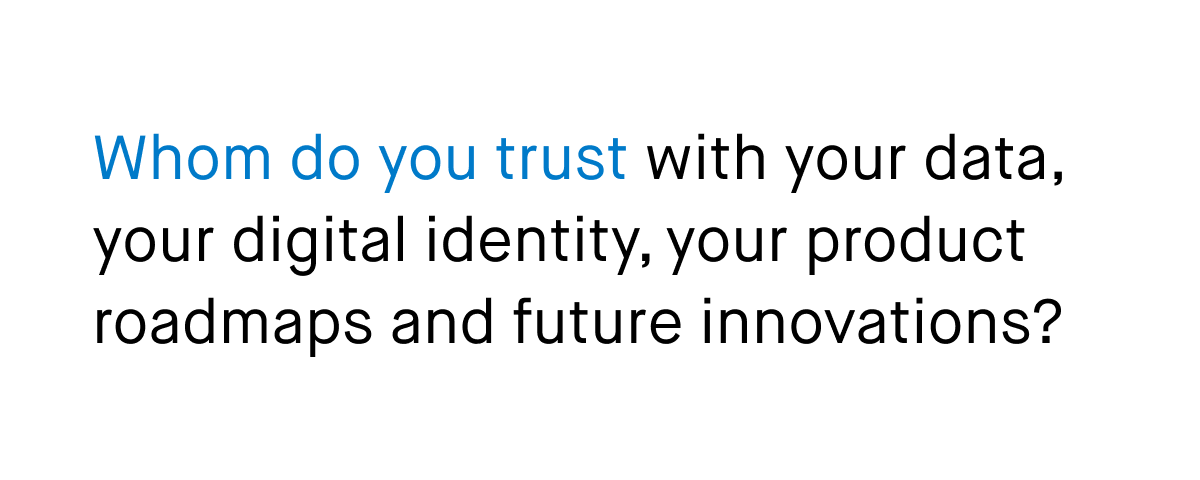
This is not purely a technical consideration. It is a question of jurisdiction, governance, operational control, and long-term strategic dependency. Entrusting sensitive user information or business-critical intellectual property to external platforms inevitably creates exposure: legal, geopolitical, and competitive. Trust, in this context, must be verifiable, enforceable, and aligned with European regulatory and security standards.
At the same time, organizations face an equally pressing concern: How can we maintain sovereignty and still leverage the latest AI models to stay ahead of the competition? Innovation and sovereignty must not be framed as opposing forces.
The challenge lies in designing architectures that combine both:

- Secure and sovereign infrastructure for sensitive workloads

- Controlled environments for advanced analytics and AI

- Clear governance frameworks for model training, inference, and data usage

- Hybrid or federated approaches that allow selective integration of cutting-edge capabilities without surrendering control
In other words, the strategic objective is not isolation, it is controlled openness. Companies must be able to adopt AI technologies while ensuring that their core assets remain protected under trusted legal and operational frameworks.
The Next Phase of Sovereign Innovation Begins Now
European cloud service providers (CSPs) and technology partners have reached a new level of maturity. Sovereign infrastructures are no longer conceptual; they are operational, certified, and aligned with Europe’s regulatory trajectory. From high-assurance national frameworks to pan-European cloud and edge initiatives, the building blocks for secure, competitive digital ecosystems are in place.
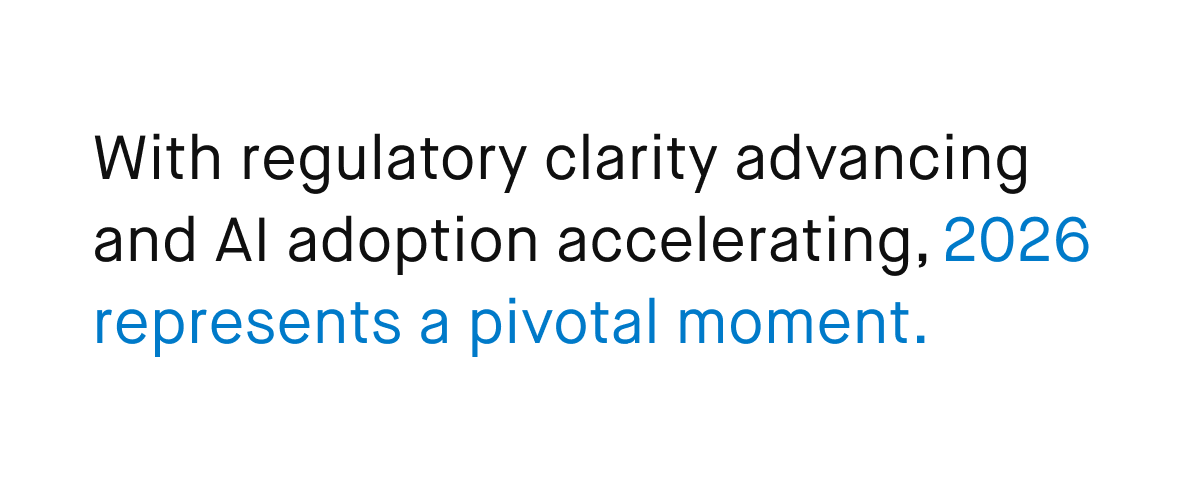
With regulatory clarity advancing and AI adoption accelerating, 2026 represents a concrete decision window. The EUCS certification framework is moving toward finalization, STACKIT Public Cloud Restricted is launching for classified workloads, and the EU Data Act's cloud-switching provisions are entering enforcement. Organizations that establish sovereign architectures now will be positioned to meet these requirements by design rather than by retrofit.
The market is converging around trusted infrastructure, interoperable standards, and scalable innovation platforms. European CSPs are increasingly capable of delivering the combination businesses demand: sovereignty by design, security by default, and performance at scale.
The opportunity now lies with companies themselves. Is your organization prepared to move beyond fragmented digital initiatives and strategically combine innovation and data? Are you ready to treat data not only as an operational asset, but as a growth engine: protected, governed, and intelligently leveraged through advanced analytics and AI?
The competitive edge will belong to those who can integrate three dimensions simultaneously:
- Sovereign control over sensitive and business-critical data
- Access to cutting-edge AI and cloud capabilities
- A coherent transformation strategy that turns technology investments into measurable business outcomes
Europe’s infrastructure ecosystem is ready. The regulatory direction is clear. Technological capabilities exist. The decisive question is no longer whether the foundation is available, but whether your company is prepared to build it and unlock the next phase of sustainable growth.
intive Is Ready to Tackle the Challenge
As data sovereignty becomes a non-negotiable foundation for digital business, companies need more than strategy papers and compliance checklists. Bridging the gap between regulation, secure infrastructure, and real innovation requires deep technical expertise, architectural clarity, and trusted partnerships.
intive support organizations in addressing the concrete challenges behind data sovereignty: enabling secure and compliant data sharing, protecting sensitive and business-critical information, and designing cloud and AI architectures that combine innovation with control. Our digital sovereignty approach goes beyond technology migration. We help clients rethink operating models, establish governance frameworks and build innovative solutions that align with both regulatory requirements and competitive ambition. One example is Clini Code, an AI-assisted coding solution developed for the healthcare sector, designed from the ground up with data sovereignty, compliance, and clinical governance embedded into its architecture.
With skilled experts across AI, cloud, cybersecurity, data engineering, and a strong ecosystem of trusted European and global partners, intive delivers end-to-end support. From strategy and architecture design to implementation and continuous optimization, we ensure that sovereignty is embedded by design, not added as an afterthought. intive stands ready to help organizations turn data sovereignty into a driver of resilience, differentiation, and sustainable growth.
Ready to assess where your organization stands?
intive offers a Sovereign Architecture Review. We evaluate your current cloud and data landscape, identify sovereignty gaps, and define a concrete roadmap aligned with European regulatory requirements and your business objectives. Get in touch with our team to discuss your project.
.png)

.png)


.png)
.png)
.png)
.png)